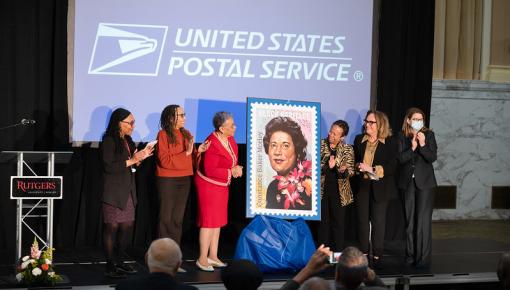
Events Black Heritage Postal Stamp Dedicated to Legal Pioneer left to right: Bonita Terry, USPS Manager, Univ. of Penn. Professor Dorothy Roberts; Della Moses Walker, director of the NJ chapter of ESPER, Constance Royster `77; Susan Davis `81 and Rutgers Law Dean Johanna Bond. ... Read moreAll News Alumni SpotlightAlumni NewsAlumni Resources Carlos Medina RLAW '92 Q&A with Raina Bretan RLAW'13, Manager at PayPal Institute for Professional Education Rutgers University Alumni Association Career Development Resources Loan Repayment Assistance Request a Transcript Recent News